 ▶Watch on YouTube
- Very similar hardware: Z2 Extreme in the Legion Go 2, AI Z2 Extreme (adds an NPU) in the Xbox Ally X.
- The Xbox Ally X is lighter, smaller and more comfortable for long sessions, and feels purpose-built for gaming.
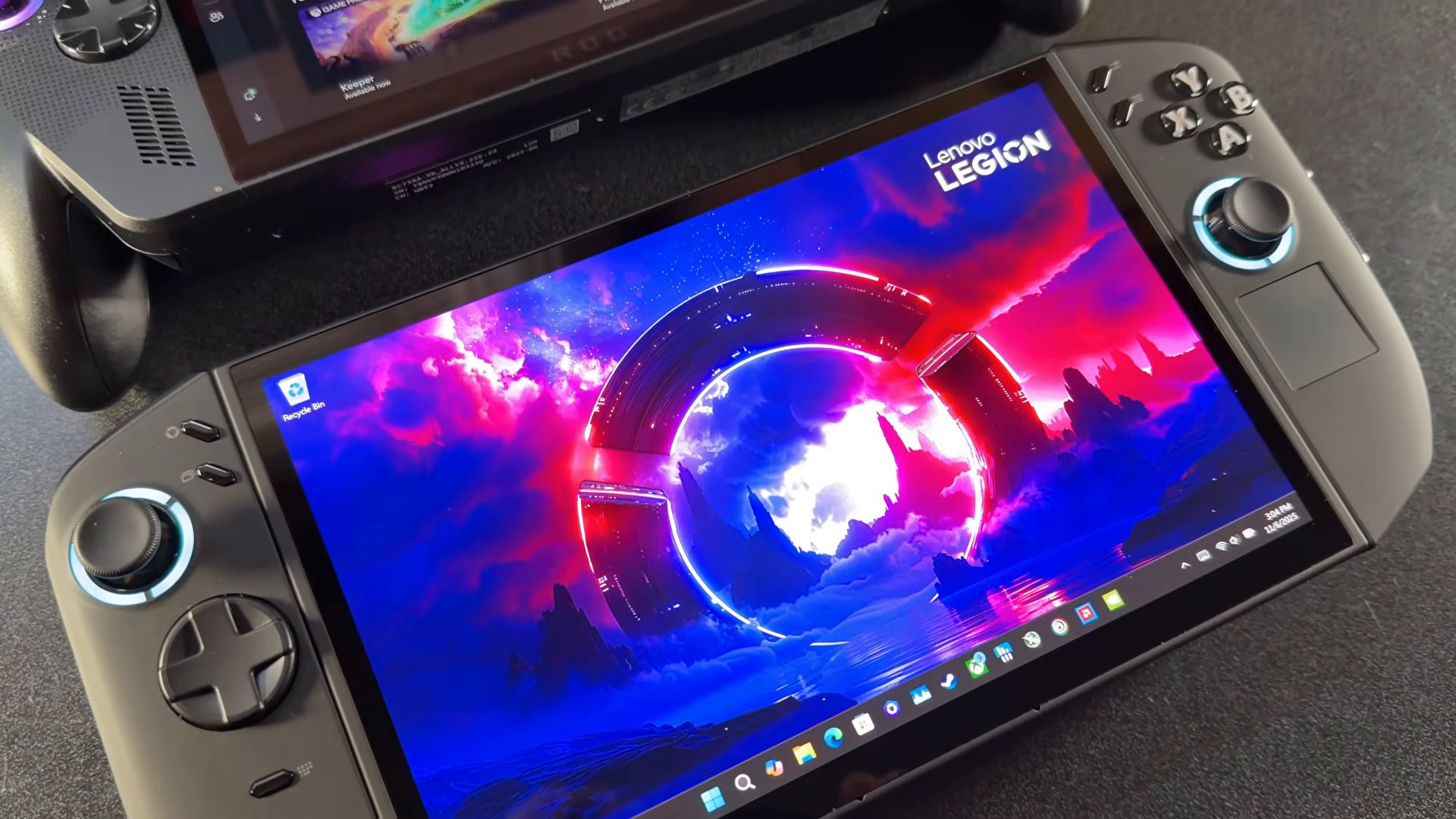
- The Legion Go 2 has the 8.8-inch OLED HDR screen, the best handheld display I've used, plus removable controllers and a kickstand.
- Performance is close, but the Legion Go 2 fell behind in some games, most of all Cyberpunk 2077 at 25W. With tax I paid about $370 more for the Legion Go 2.
If you're shopping in the $1,000-and-up range, the Legion Go 2 and the ROG Xbox Ally X are probably both on your list. I'm not going to hit on everything here, but these are the points I found most important: design, ergonomics and comfort, performance, the screens and the price.
Design
There are big differences in design and size, but not so much in the hardware inside. The Legion Go 2 has the AMD Z2 Extreme, while the Xbox Ally X has the AI Z2 Extreme, which adds XDNA 2 NPU cores for AI tasks. Hardware-wise, I think they'll offer the same performance in most games. Software and drivers from ASUS and Lenovo can be a different story, as you'll see in the performance section.
The Xbox Ally X uses an all-in-one body with the Xbox controller look and feel built in. It's never been the sleekest device, but it is growing on me. The Legion Go 2 sticks with removable controllers and a kickstand like the original Go, which makes it more versatile but a bit heavier. In my opinion that lines the Go 2 up more as an all-in-one device for all types of media, while the Xbox Ally X feels purpose-built for gaming.
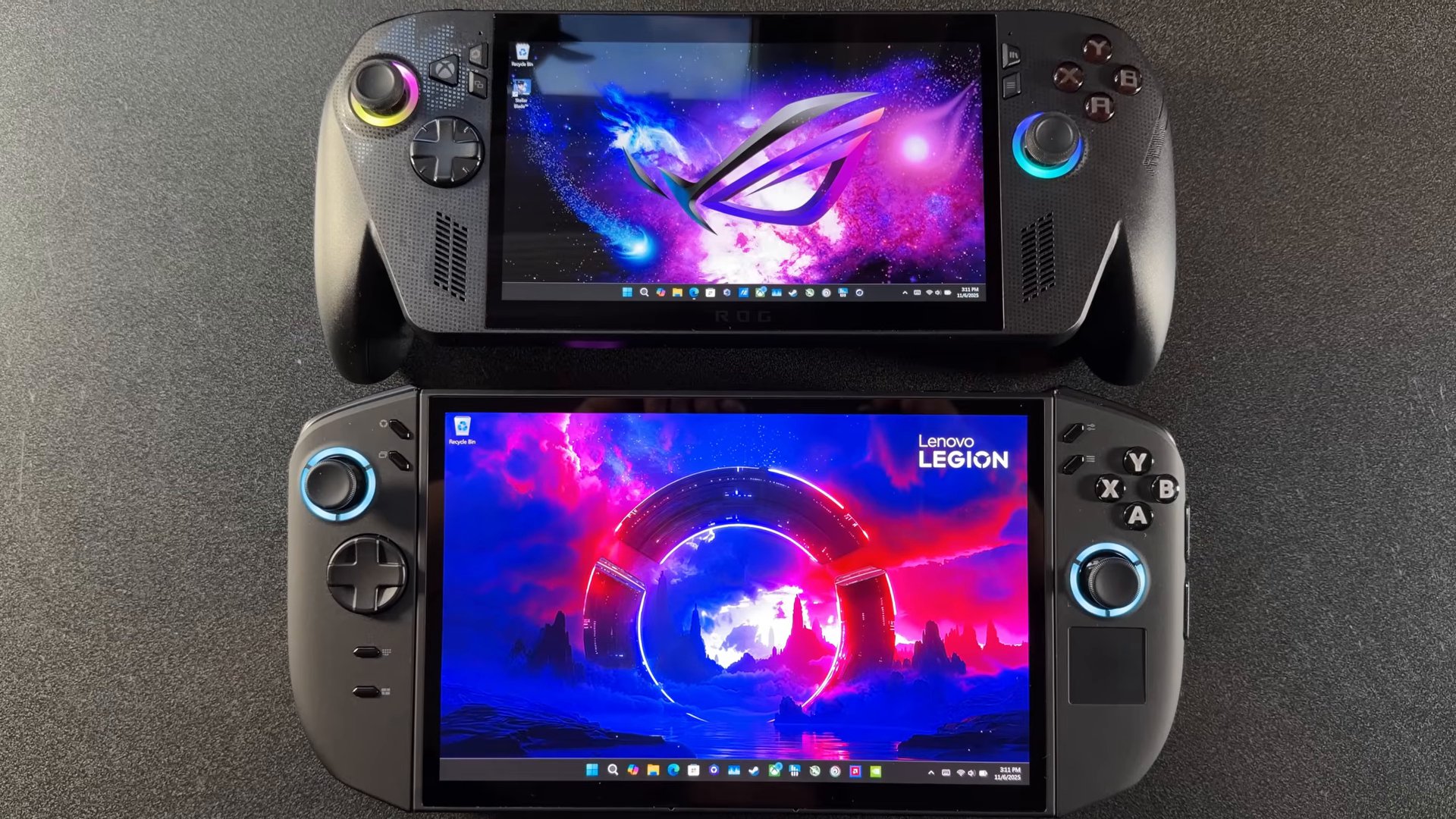
The Xbox Ally X has an 80Wh battery and the Legion Go 2 a 74Wh battery. Paired with the Z2 Extremes, both get great battery life compared to what we were used to with the original Go and other Z1 Extreme devices. Audio, which was horrible on the Go 1, is much improved on the Go 2, and both have good audio that more than gets the job done. Both run fairly cool, and neither has had loud fans or coil whine for me.
The Legion Go 2 feels premium. It's very pricey, but the materials feel really nice to hold. Buttons and triggers are good on both, but the D-pad and ABXY buttons on the Go 2 feel much better. I've talked before about how loud and clunky the Xbox Ally X buttons are. It's not a big deal, but the Go 2 doesn't have that problem.
Ergonomics and comfort
For long gaming sessions, the Xbox Ally X is more comfortable to hold. It's lighter, smaller and feels a lot like holding an Xbox controller. The trade-off is the smaller 7-inch IPS screen, which is fine but will be too small for some people. The Legion Go 2 is heavier and less ergonomic, but it's still comfortable, and better than the original Legion Go. In exchange you get removable controllers, the kickstand and, most importantly, the OLED screen. I mostly hold these as handhelds and rarely remove the controllers, so that's how I judged them.
If comfort, long sessions and a smaller, more compact size are your priority, look at the Xbox Ally X. If screen size, OLED and removable controllers matter most, lean toward the Legion Go 2.
Performance
I spent about 4 days and over 40 hours verifying everything here, with factory resets, DDU, and help from two other people with a Go 2, because Cyberpunk threw me for a loop. Most earlier reviews I've seen have the two very close, with one beating the other by an FPS or two depending on the game. We're on BIOS 11 now instead of 10, and maybe a newer driver, and some games now run a little differently. Some still run identically, so I think drivers are the main factor, but the new BIOS is suspicious too. ASUS and Lenovo are responsible for drivers, BIOS and firmware, and that alone can create differences on the exact same hardware.
Battlefield 6 runs the closest to the same on both at 17W and 25W, with GPU clocks and performance very close, though at times the Go 2's GPU clocks still fall behind. Running the Xbox Ally X in desktop mode or the full screen experience made no difference, maybe 1 FPS. Stellar Blade, which I don't have installed here, was an exact match no matter what I did.
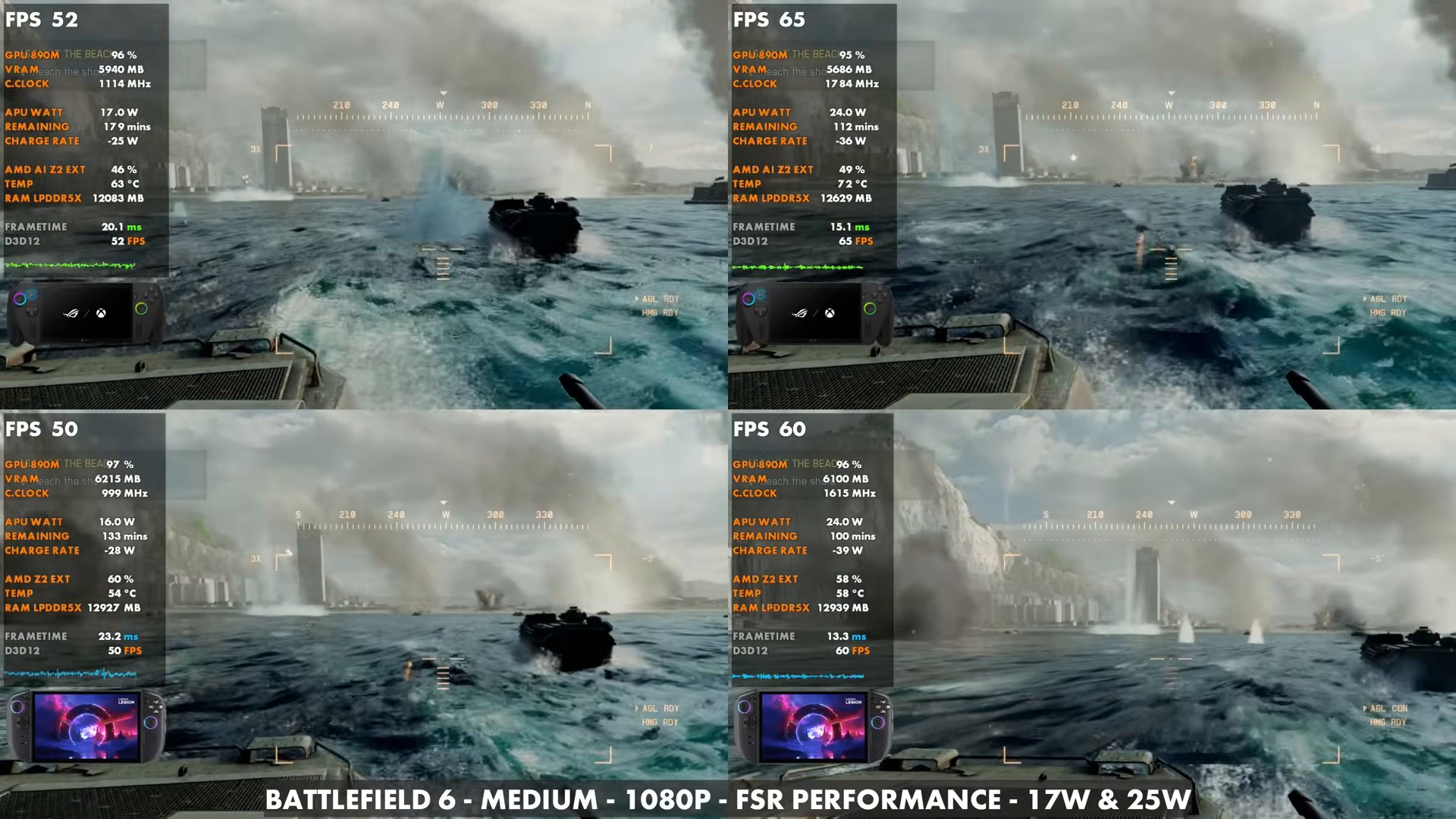
Doom: The Dark Ages is similar to Battlefield: a small performance gap, with the Go 2's GPU clocks a little lower even though it draws more power. I think this is firmware, BIOS and driver stuff that Lenovo can tweak to get back some of the performance the Go 2 is missing. It's not a lot, depending on the game, but I'm definitely seeing it.
Cyberpunk 2077 was the interesting one. At 17W the two matched GPU clocks almost pound for pound, and the benchmark came down to almost the same FPS. Above 20W things got odd: at 25W I saw a 5 to 7 FPS difference and a 500 to 700 MHz gap in GPU clock in favor of the Xbox Ally X. That's probably driver related, where the Go 2 isn't ramping clocks when you push more TDP.
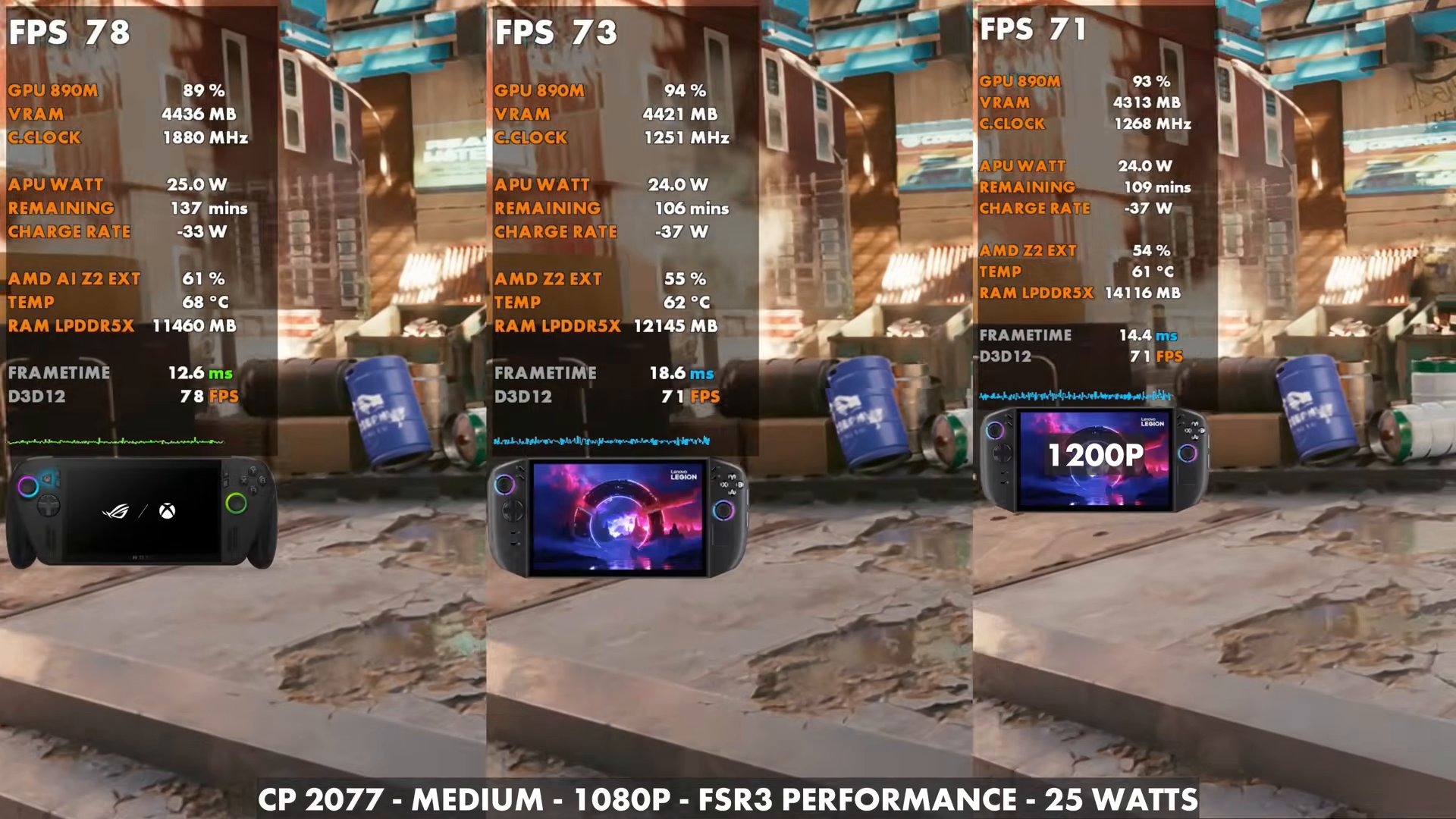
Is it a big deal? No. Is the Go 2 broken? No, it's very close. But I saw this across three games of different ages, and it depends on what you play. It's early days at launch, and I expect updates to move performance around on both devices. I'll cover any GPU driver or BIOS updates from Lenovo and ASUS.
Screens
The Xbox Ally X has a 7-inch 1080p 120Hz IPS VRR display. The Legion Go 2 has an 8.8-inch 1200p 144Hz OLED with HDR and VRR. That screen is a big part of the price difference. If gorgeous OLED screens are your thing, the Go 2 has the best handheld display I've used, hands down. As much as I enjoy the comfort of the Xbox Ally X, I can't deny how amazing it is to game on that big OLED HDR display. I think a lot of buyers in the $1,000-and-up range will pay a few hundred more for the OLED alone.
Price
With tax, I paid about $1,070 for the Xbox Ally X and $1,440 for the Legion Go 2, so the Go 2 was about $370 more for me. Honestly, I don't like the direction of handhelds getting this expensive compared to a couple of years ago. All tech is going up and I get that there are a lot of factors, but it feels like a step in the wrong direction for growing the market. For some people the extra $370 for the Go 2 will be a no-brainer, and for others it won't be worth it. Make your own list of wants and needs and decide what fits your budget.
Verdict
It's a tough choice for me, and I go back and forth between the two. The more I use the Legion Go 2 with that OLED screen, the more inclined I'd be to keep it over the Xbox Ally X if I had to return one. I'd still miss the Xbox Ally X, even though I'm not a fan of its 7-inch screen. Besides the high prices, I've really enjoyed both, but they appeal to different audiences: the Xbox Ally X is purpose-built for gaming, while the Legion Go 2 is more of a tablet replacement and gaming handheld in one.
Want more handheld tests?
New Steam Deck, ROG Ally, Legion Go and Steam Machine performance videos every week.