 ▶Watch on YouTube
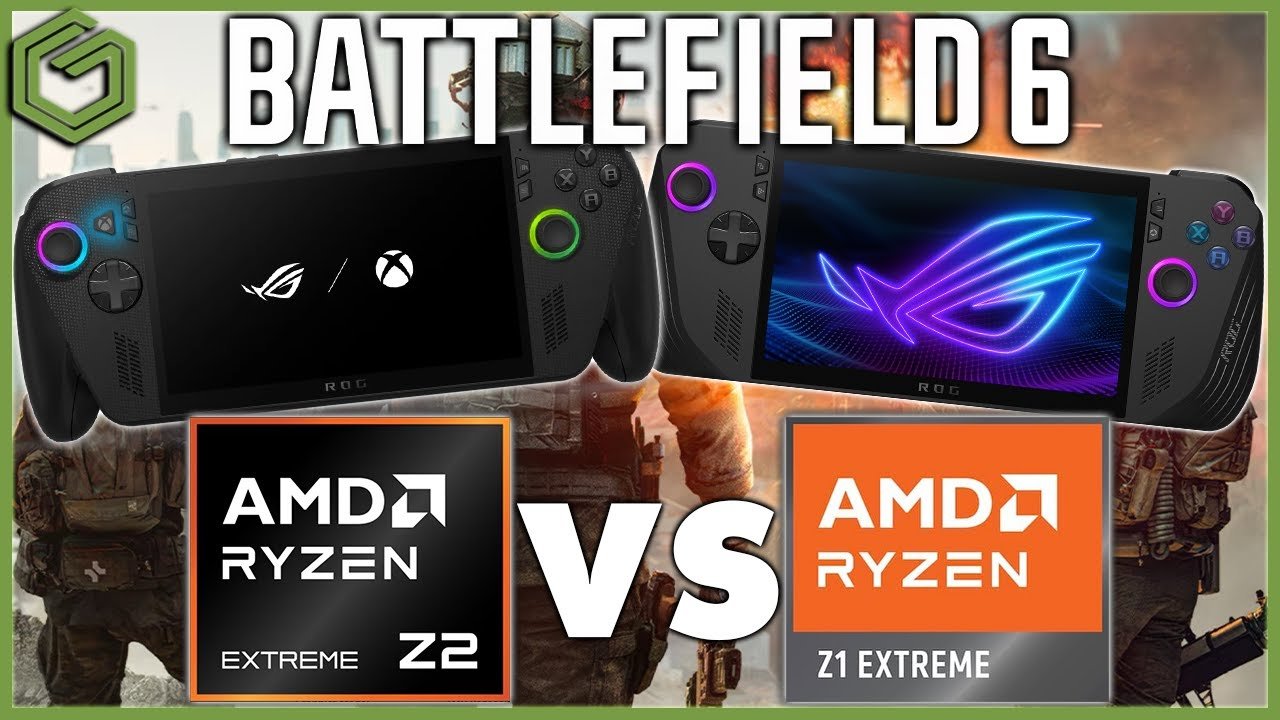
- The new ROG Xbox Ally X (Z2 Extreme) against the original ROG Ally X (Z1 Extreme), both with 24 GB of RAM.
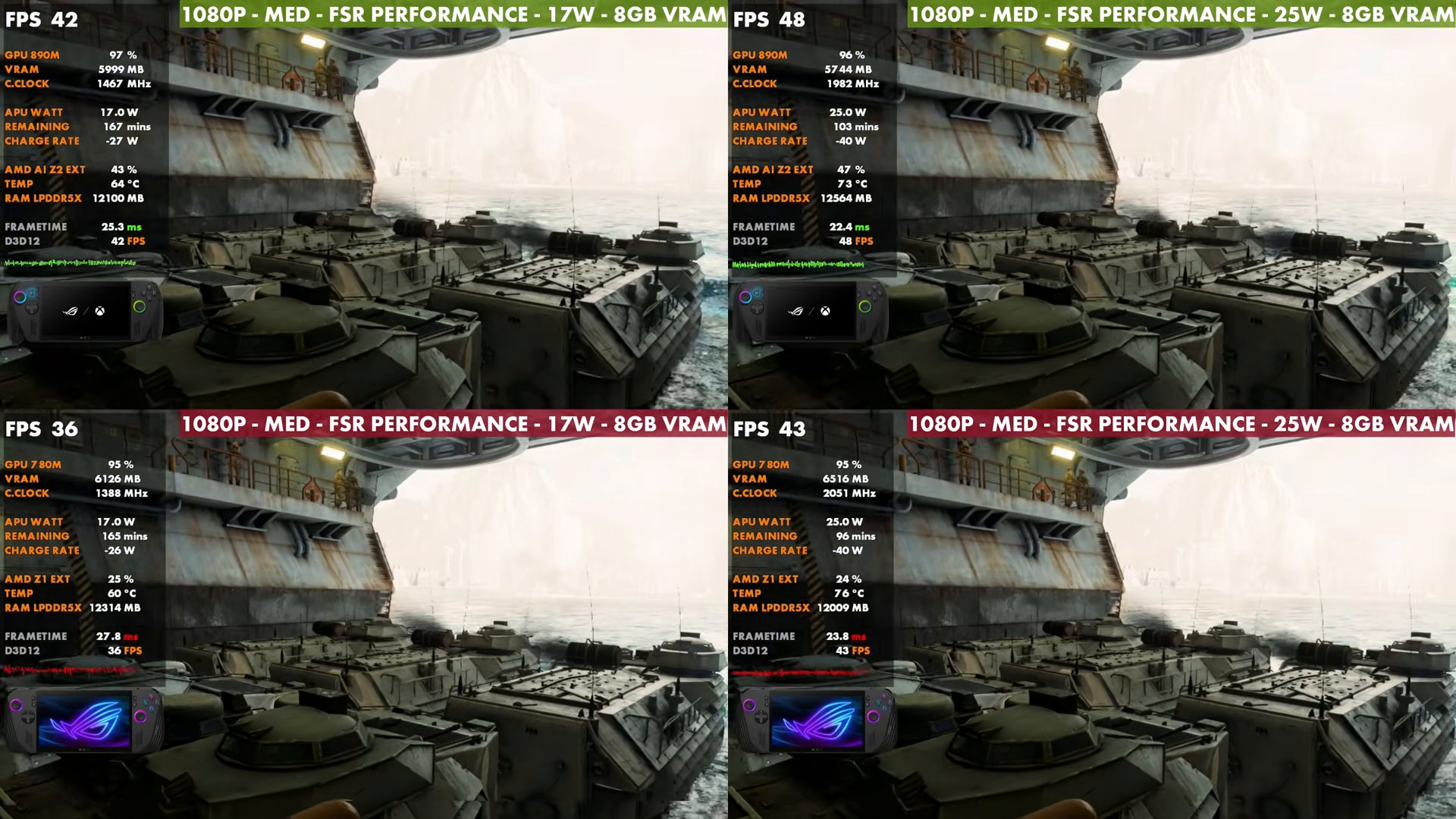
- Focused on 17 W (Performance) and 25 W (Turbo), mostly in the campaign's third mission.
- At 1080p Medium with FSR Performance, the Z2 Extreme averaged about 5 FPS more at both 17 W and 25 W in my samples.
- Battlefield 6 is well optimized, and both handhelds play it pretty well.
Battlefield 6 is the first game I've really spent the time with to compare the all-new ROG Xbox Ally X against the original ROG Ally X. Both have 24 GB of RAM, but it's the Z2 Extreme against the Z1 Extreme, and I think that makes for a pretty interesting comparison.
All the handhelds I've tried are able to play this game pretty well. I've done pretty decent with the Claw, the ROG Ally and the Legion Go, and it's been a well-optimized game and a decent experience overall, so I didn't expect too many problems here either.
Test setup
- Both devices on the Xbox full screen experience, launching the game from it (in my back-and-forth testing, I haven't noticed a real difference on either device between that and desktop mode)
- 17 W (Performance mode) and 25 W (Turbo mode)
- Fullscreen, V-Sync off, 8 GB VRAM on both
- Mostly 1080p Medium, with some Low, a little 720p, and FSR Performance, FSR Native AA or FSR Balanced (labeled below)
- Mostly the campaign's third mission, because it's easier to be consistent there, plus a quick look at multiplayer at the end
You can go higher: 30 W plugged in on the Ally X, and 35 W unplugged on the Xbox Ally X. That often only gives you 2 to 5 FPS more, though, and I really wanted to see what 17 and 25 W were doing on these devices.
Results
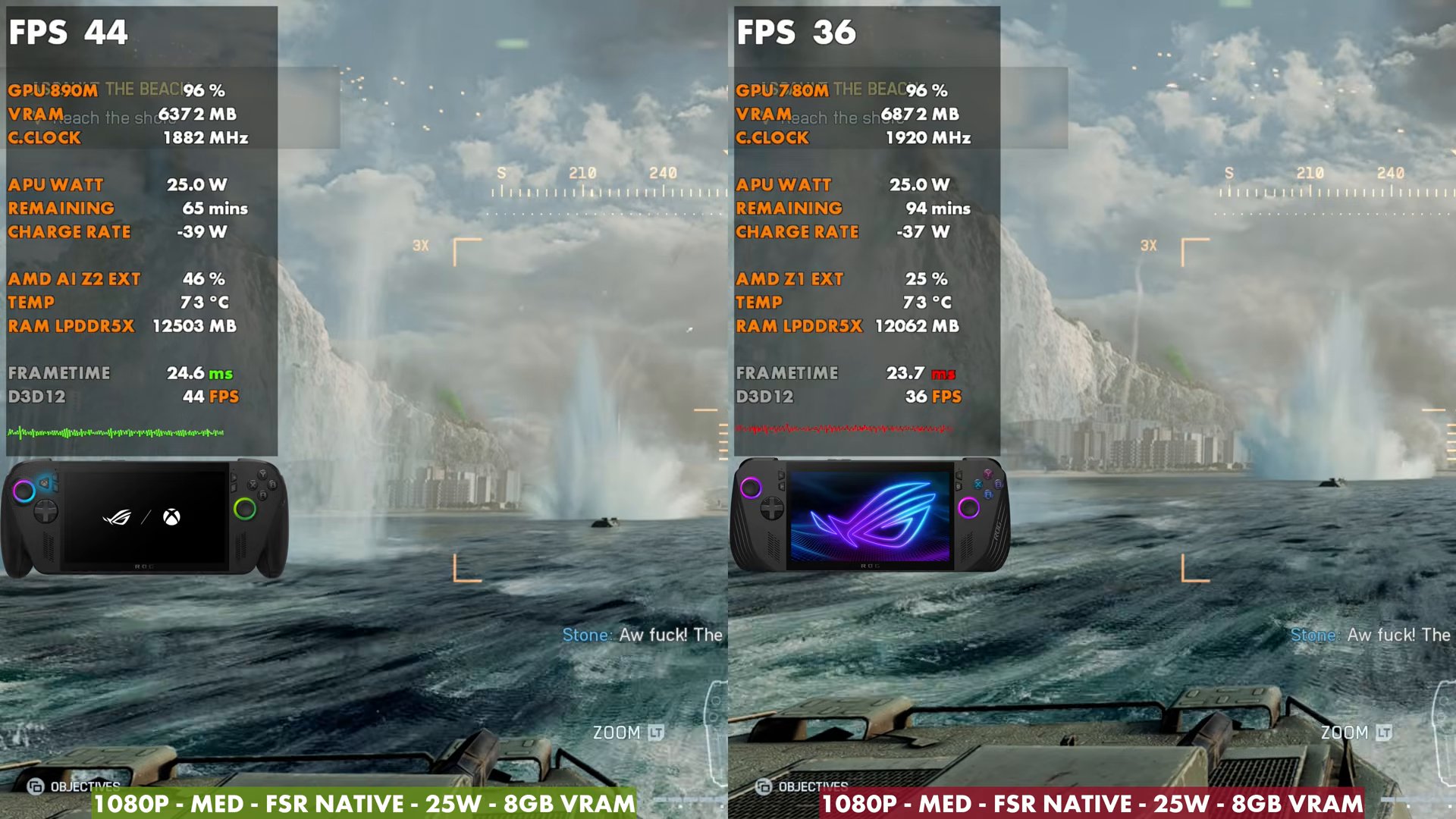
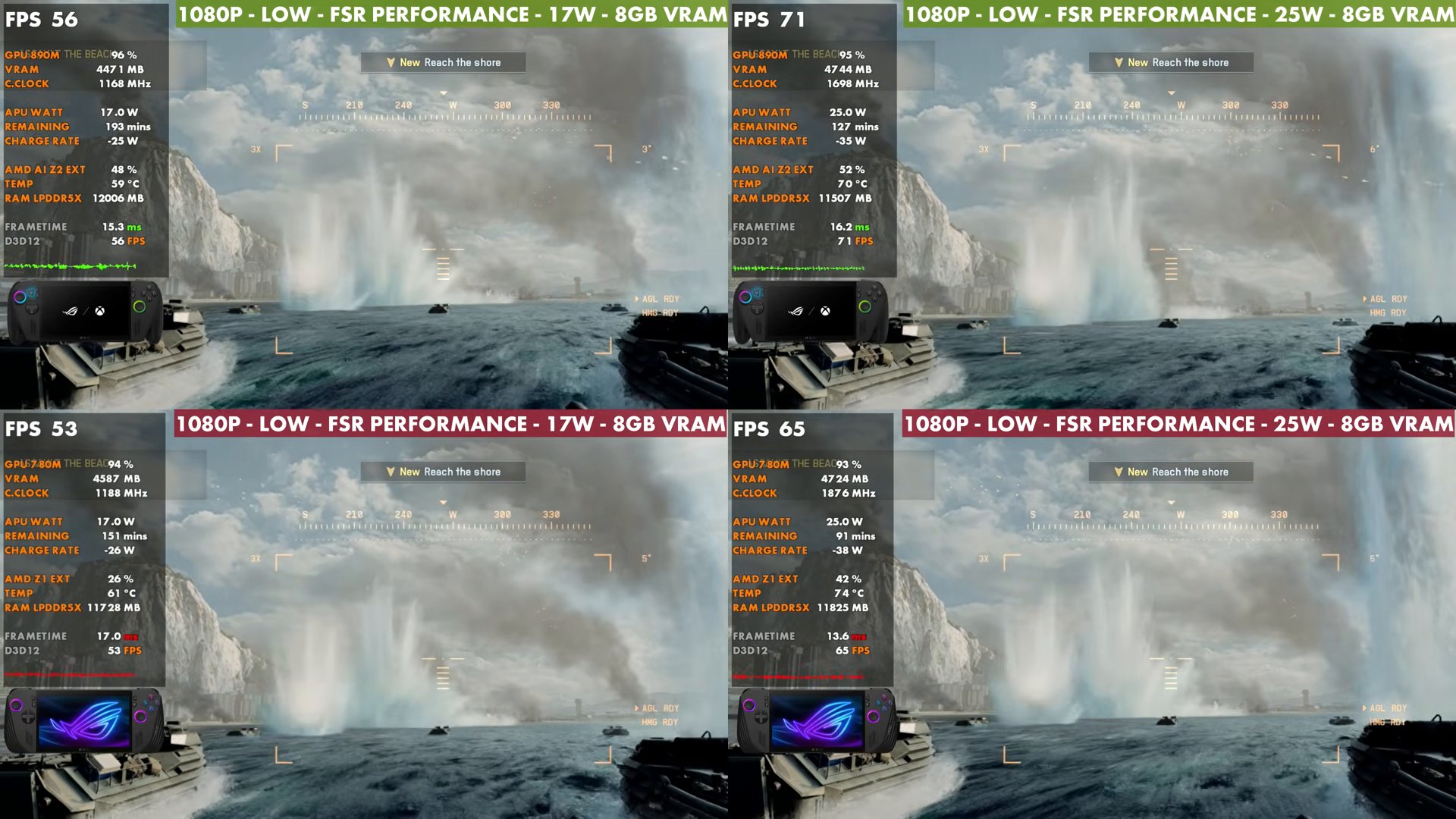
These are the overlay readings from the side-by-side and four-way splits in the video, sampled every 10 seconds, so treat them as typical numbers rather than a benchmark run.
| Settings | TDP | Xbox Ally X (Z2 Extreme) | ROG Ally X (Z1 Extreme) |
|---|---|---|---|
| 1080p Medium, FSR Performance | 17 W | ~47 FPS (39–56) | ~42 FPS (35–50) |
| 1080p Medium, FSR Performance | 25 W | ~57 FPS (48–68) | ~53 FPS (44–64) |
| 1080p Low, FSR Performance | 17 W | ~48 FPS (42–56) | ~48 FPS (39–54) |
| 1080p Low, FSR Performance | 25 W | ~65 FPS (51–73) | ~63 FPS (58–68) |
| 1080p Medium, FSR Native AA | 25 W | ~39 FPS (32–44) | ~32 FPS (28–36) |
| 720p Medium, FSR Native AA | 25 W | ~59 FPS (49–67) | ~54 FPS (46–62) |
The biggest gap in these samples was at 1080p Medium with FSR Native AA, where the Z2 Extreme averaged about 6 FPS more. With FSR Performance on Low at 17 W, the two were pretty much even in the same scenes.
Multiplayer
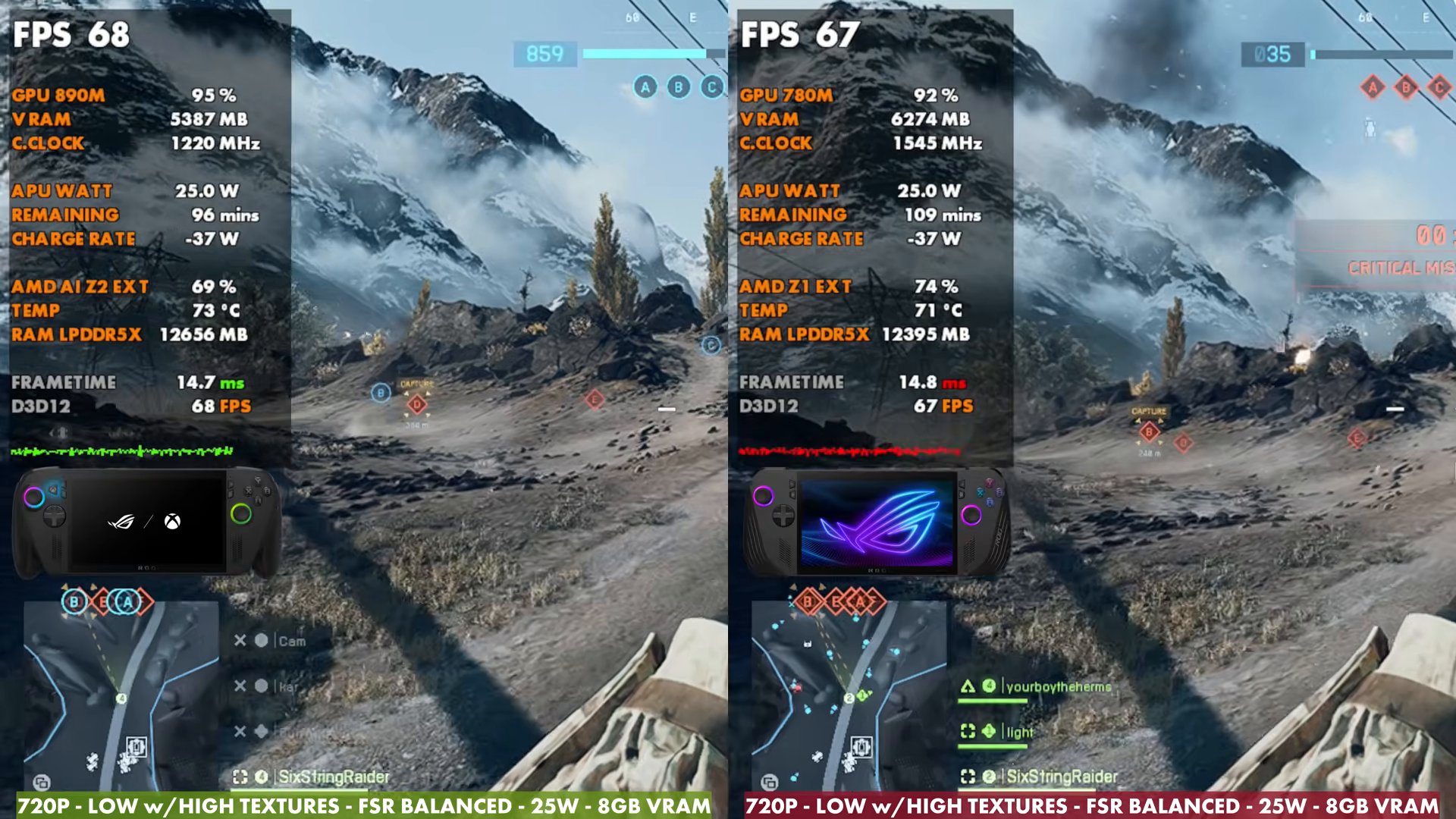
To finish, I threw in a quick look at multiplayer at 25 W, using Low with High textures and FSR Balanced. At 720p, the Xbox Ally X read 68 to 70 FPS and the ROG Ally X 65 to 68 in the side-by-side. At 1080p, both were around 52 to 53 FPS.
Verdict
Battlefield 6 is well optimized, and both of these handhelds play it well at 17 and 25 W. In these runs, the Z2 Extreme in the Xbox Ally X was ahead of the Z1 Extreme in the ROG Ally X in most of the campaign comparisons, by a few FPS with FSR Performance and a bit more at native resolution, while Low settings at 17 W came out pretty even.
Want more handheld tests?
New Steam Deck, ROG Ally, Legion Go and Steam Machine performance videos every week.