Quick answer: Microsoft added clustered geometry and partitioned TLAS to DirectX Raytracing in a developer preview on October 28, 2026, and games must integrate the features before players see any gains.
Microsoft released a preview of two new DirectX Raytracing (DXR) features on October 28 as part of Agility SDK 1.722-preview. Microsoft calls it the most significant DXR update since ray tracing came to DirectX in 2018.
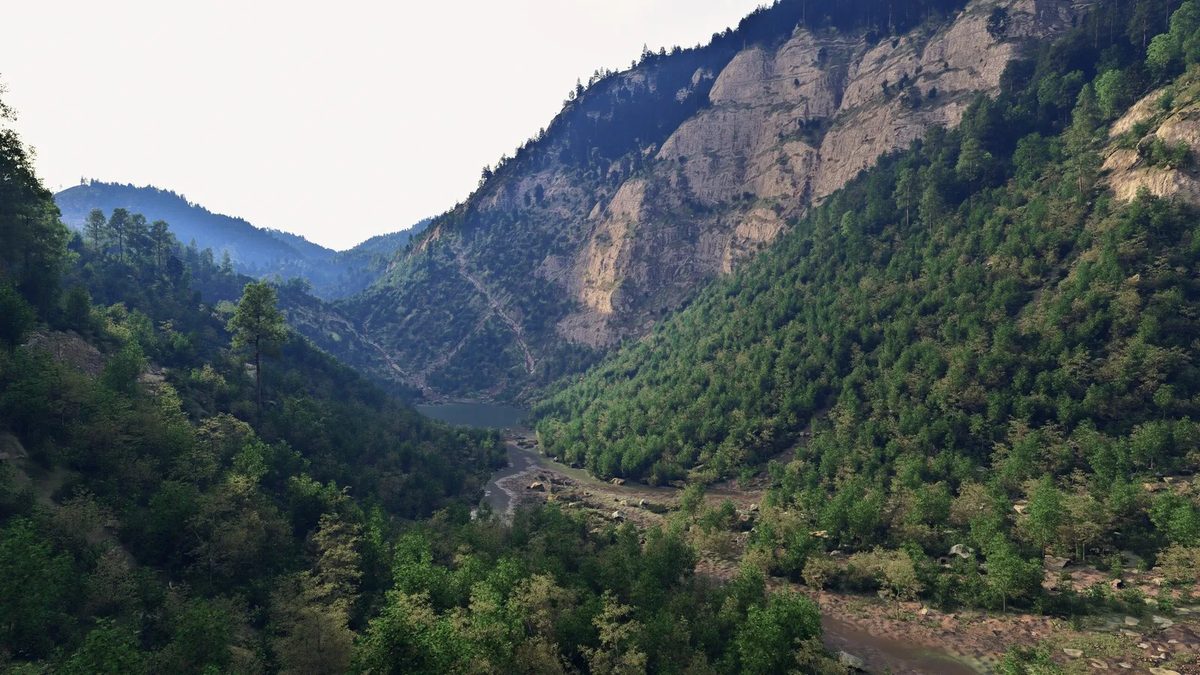
The first feature, clustered geometry, breaks objects into small reusable clusters of up to 256 triangles, so animated or streamed objects don't need a full rebuild of their ray tracing data every frame. Microsoft says that can make it practical to ray trace the same full-detail geometry a game already draws, so shadows and reflections match what's on screen. The second, partitioned top-level acceleration structures (PTLAS), lets a game update only the parts of a large world that changed instead of the whole scene.
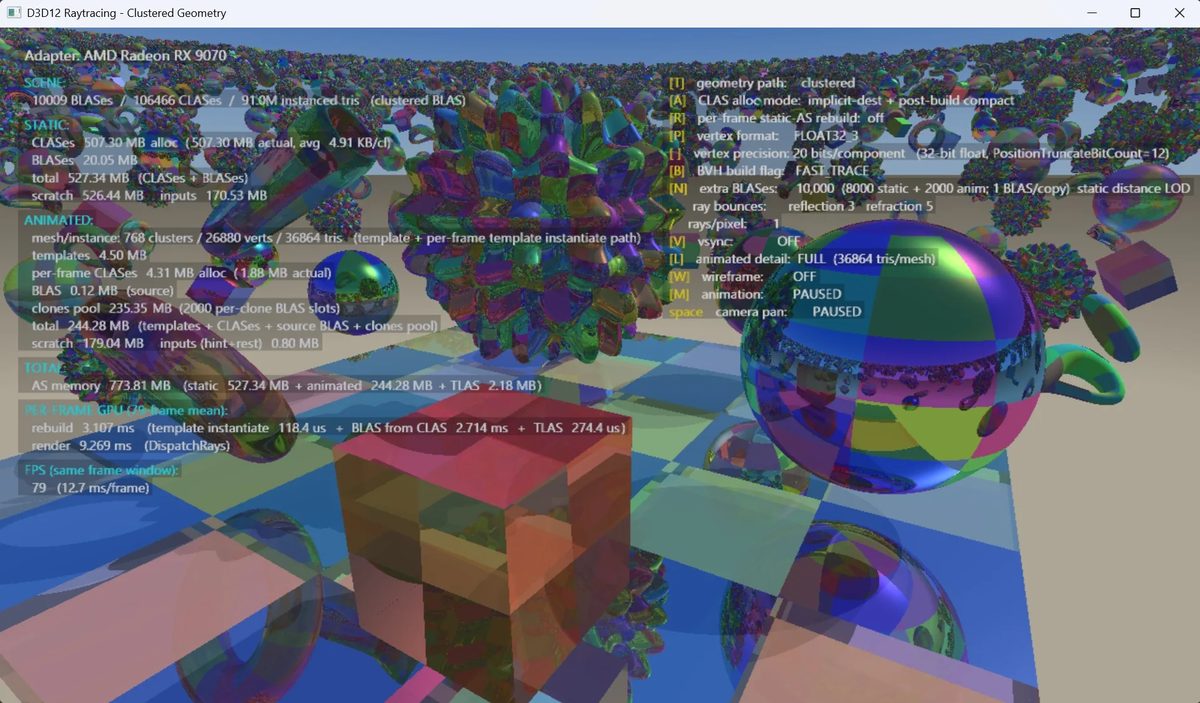
In Microsoft's own test sample on a Radeon RX 9070, clustered geometry went from 1.2 FPS to 79 FPS, and ray tracing structure memory dropped from 7,519MiB to 774MiB, about 90% less. That figure covers acceleration structures only, not total VRAM, and temporary build memory went up. Microsoft says games should not expect wins of that size, since the sample is a deliberate stress test.
Supported hardware right now is every NVIDIA RTX GPU, AMD Radeon RX 9000 cards, and Intel Arc B-series plus Core Ultra 200V and Series 3 processors. Qualcomm is targeting Snapdragon X2 driver support for the first half of 2027, and support for some older ray tracing GPUs is still to be determined. This is a developer preview, so games and engines have to adopt it first. Microsoft points to Gears of War: E-Day as an early game using the same idea through NVIDIA's own RTX Mega Geometry.