 ▶Watch on YouTube
As of January 2026, I've had the MSI Claw 8 AI+ with Intel's second-gen Core Ultra 200 chip, the Ultra 7, for a full year. This is my own unit; I paid $899 for it at launch. With Intel announcing its Panther Lake Core Ultra 300 chips this month, it felt like a good time to look back at how the Claw 8 AI+ has held up over 12 months. Spoiler: even though you can criticize any of these devices, it remains one of my favorites from 2025 heading into 2026.
- My two biggest launch complaints, limited TDP control and a buggy MSI Center M, have mostly been fixed.
- Build quality has held up. No issues with the sticks, buttons or ports in a year of use.
- The 8-inch 120Hz VRR IPS screen is still the sweet spot for me, even next to the OLED handhelds I own.
- Intel's direct GPU driver support keeps it ahead of the Z2 Extreme handhelds that wait on OEM drivers.
- The price went from $899 at launch to $1,099 for the current model, which makes it harder to justify, and Core Ultra 300 handhelds are on the way.
The model I'm using
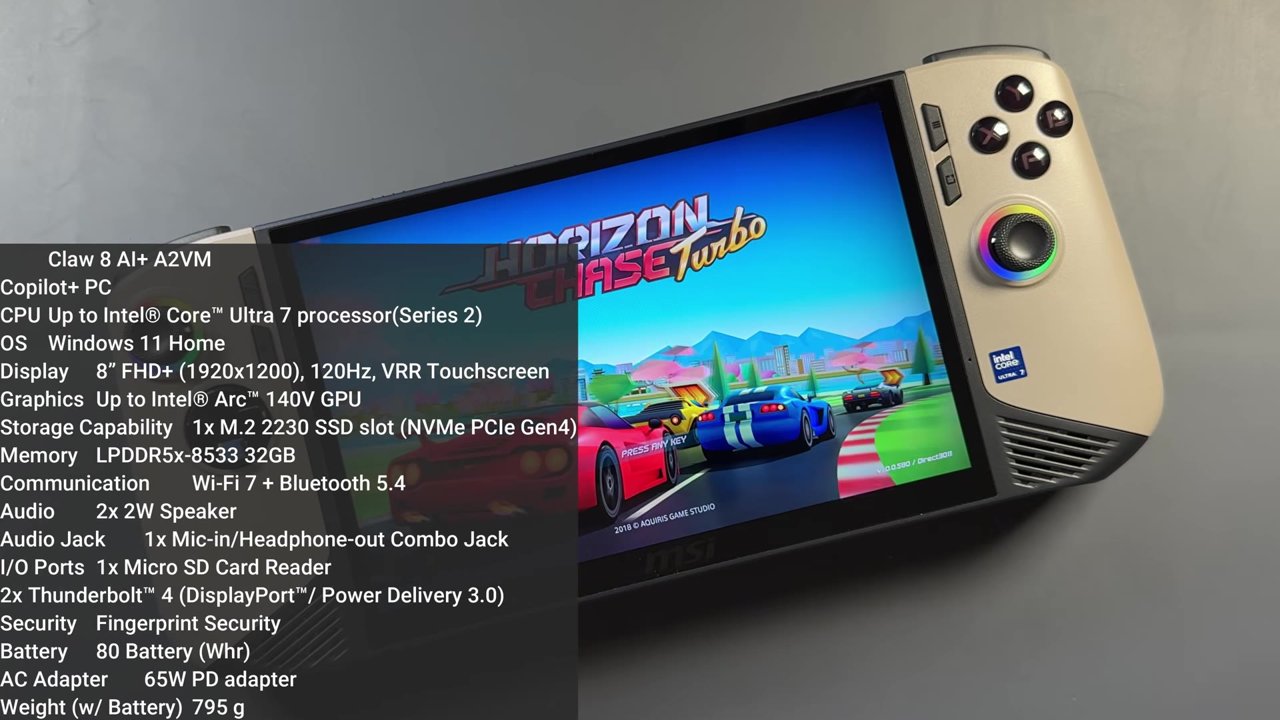
This is the Claw 8 AI+ A2VM, which I bought at launch for $899.
- Intel Core Ultra 7 (Series 2) with Intel Arc 140V graphics
- 32GB LPDDR5x-8533
- 8-inch FHD+ (1920x1200) 120Hz VRR touchscreen
- M.2 2230 SSD slot (NVMe PCIe Gen4)
- 80Whr battery and a 65W PD adapter
- Two Thunderbolt 4 ports, a microSD card reader and a headphone jack
- Wi-Fi 7, Bluetooth 5.4 and a fingerprint reader
- 795g with the battery, running Windows 11 Home
My old complaints, mostly fixed
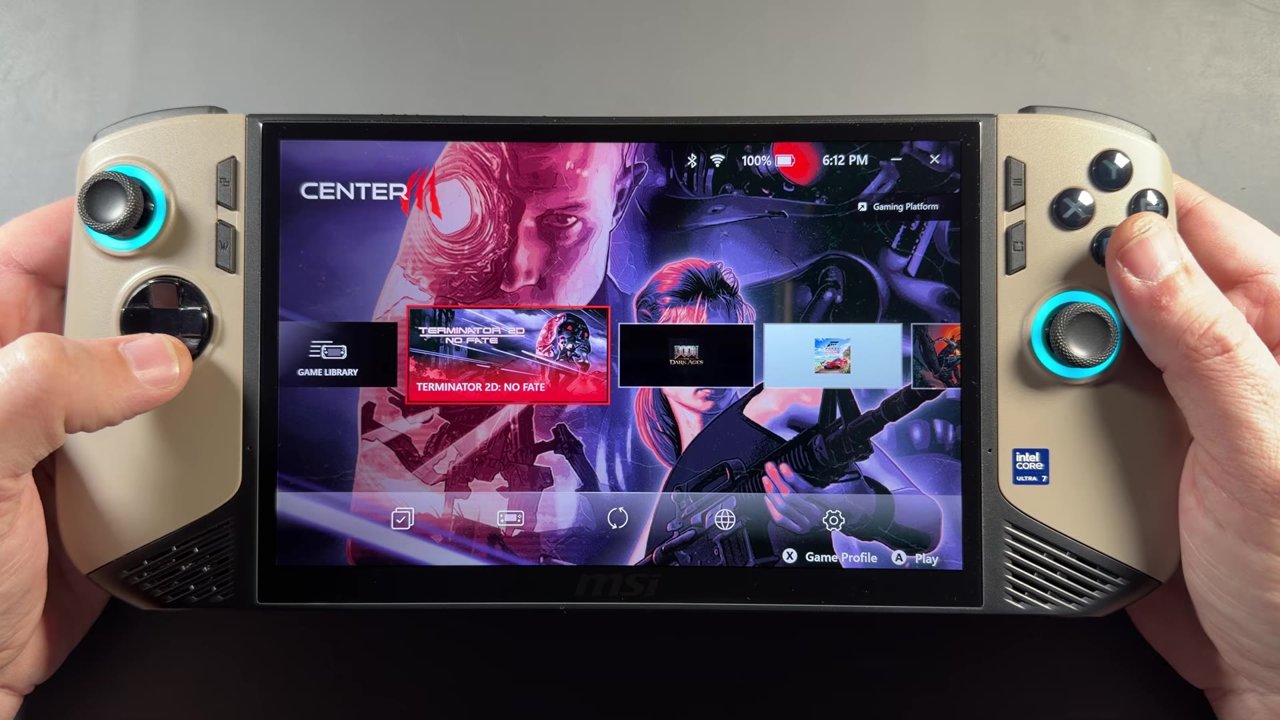
In my two-month review, I only had a few negatives about the Claw 8, mainly the lack of TDP control and a buggy MSI Center M that was missing features. Since then, we've gotten much better TDP control, with two sliders instead of the presets we had before. MSI Center M has also gotten a few updates along the way, taking care of a lot of the bugs and the sluggish interface I used to deal with. It still isn't as full-featured as ASUS's Armoury Crate, but it's much better than it was at launch.
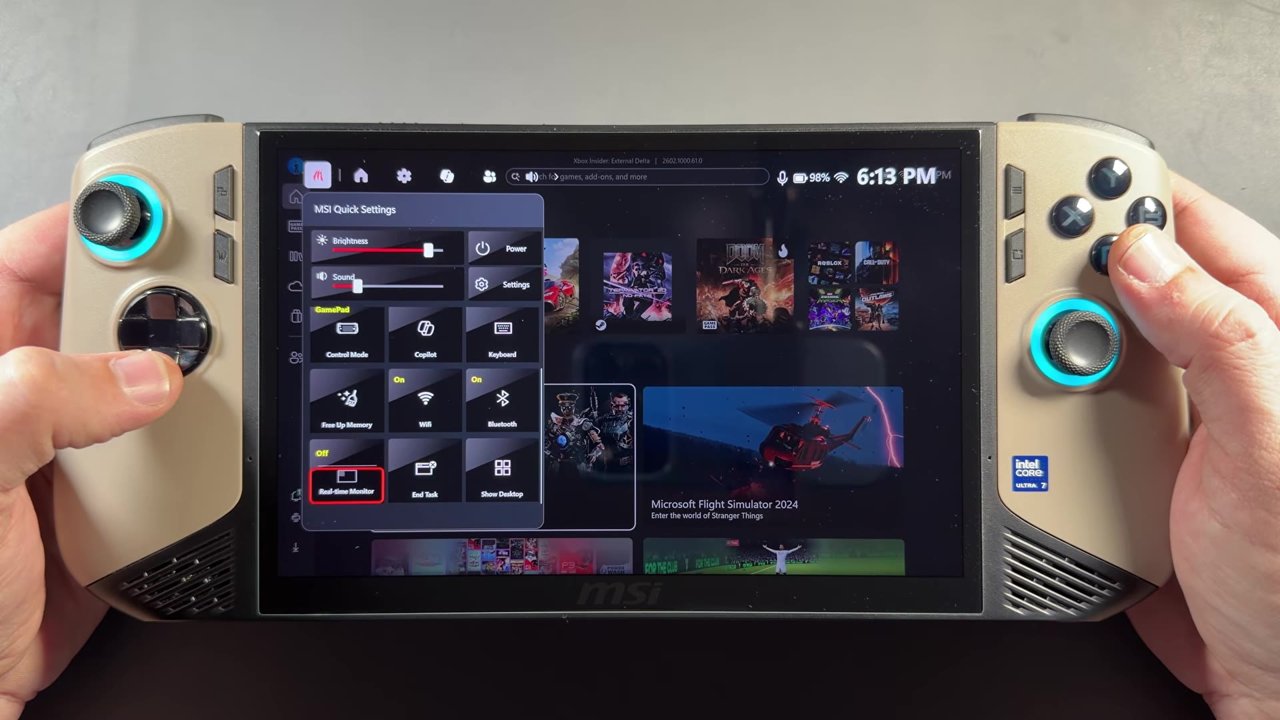
MSI also updated the quick menu in the Game Bar with more options, like the TDP sliders, which makes it easier to use whether you're in the Xbox full screen experience or the desktop. I'd still like to see more key mapping options and features inside MSI Center M, but overall I just don't have many complaints after a year.
Design, build quality and audio
Everything I liked in my original reviews still holds true. The design and comfort are still great, and a year later it's a well-balanced, comfortable device to hold and game on. The build quality has really held up. If I'd had any issues with the joysticks, buttons, ports or anything like that, I'd say so here, but nothing has gone wrong for me so far, knock on wood. There were some audio issues along the way with drivers, but updates seem to have resolved them for me, and the audio quality is still really good.
The 8-inch screen is still the sweet spot
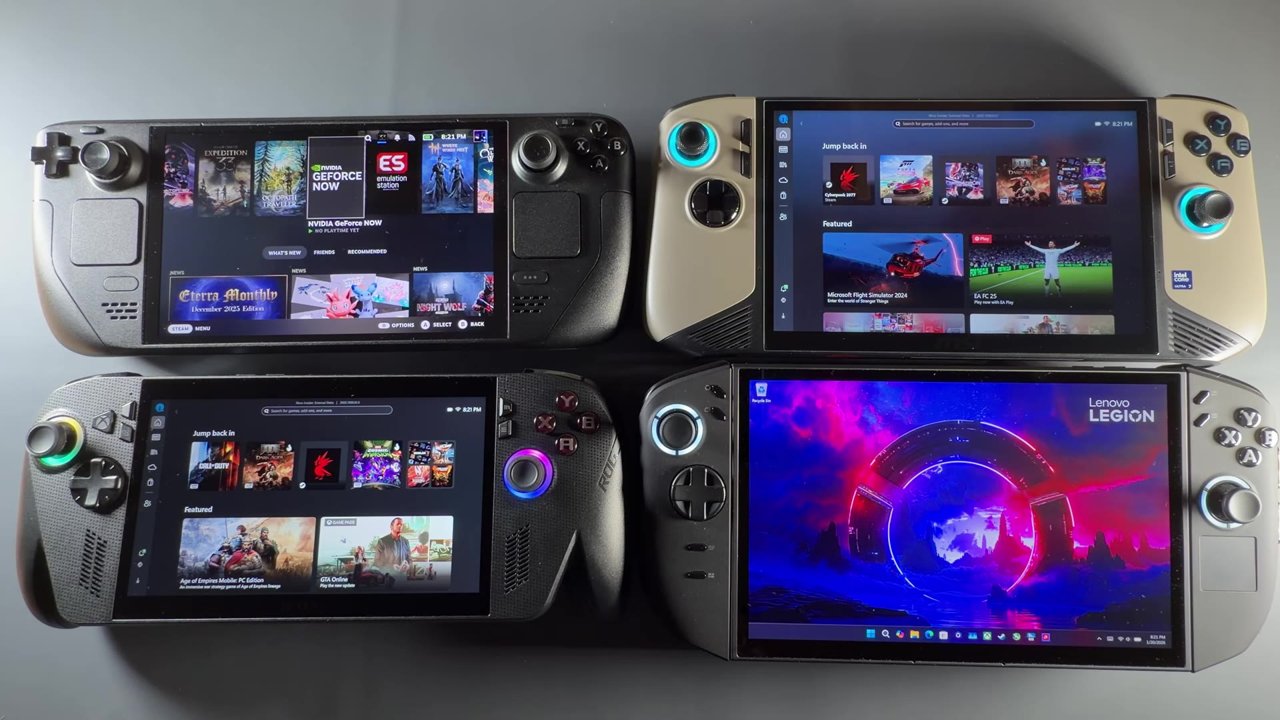
Last year I said the 8-inch screen size was a real sweet spot and one of my favorites, and a year later that still holds. I have the Legion Go 2, the Xbox Ally X and of course the Steam Deck alongside this one, so I use a lot of different screen sizes, and 8 inches is still the sweet spot for me. It may not be an OLED, but the 8-inch 120Hz VRR IPS display on the Claw is still very good.
Drivers and game performance
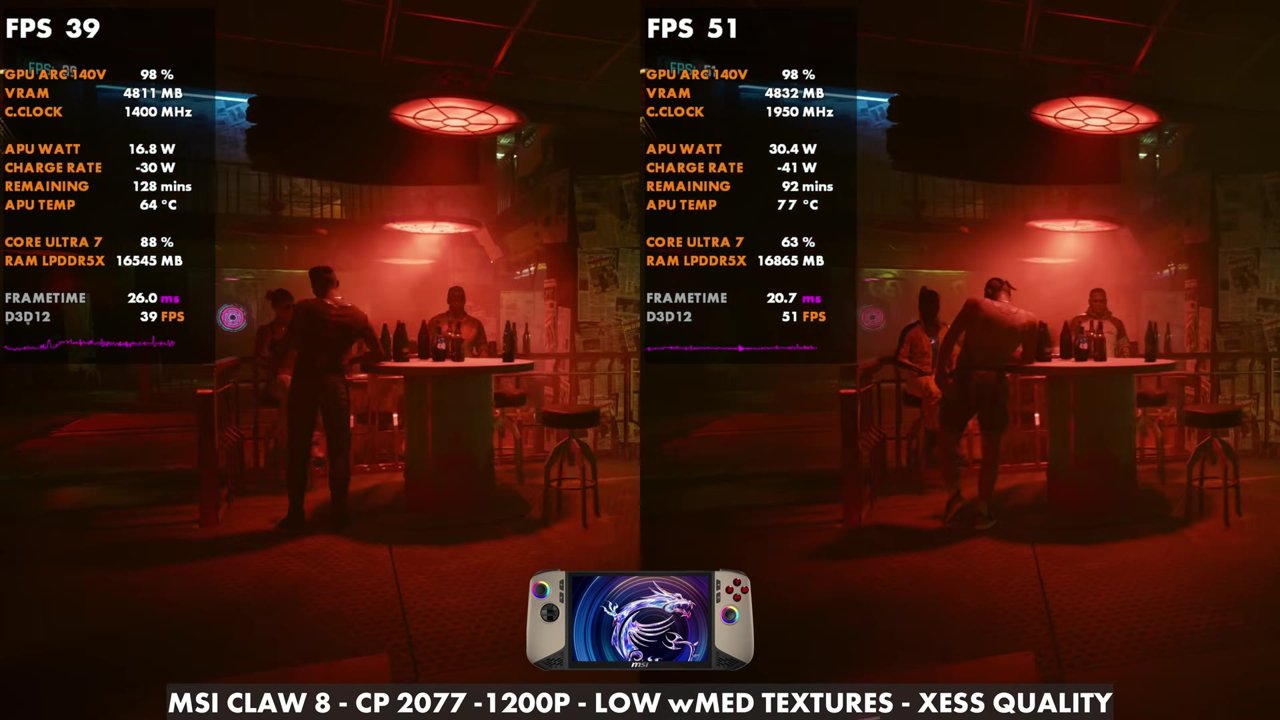
We keep getting a steady flow of driver updates straight from Intel, and that direct support really makes the Intel handhelds stand out against some of the AMD Z2 Extreme devices, where we still wait for the OEMs to get us updated drivers. At CES 2026, Intel also announced XeSS 3 and said last-gen GPUs will support it, so the current Claw 8 AI+ will benefit from that later this year.
Game performance continues to be solid too. The Core Ultra 7 in this device falls between the Z1 Extreme and AMD's newer Z2 Extreme for the most part, and depending on the game, the Intel chip can actually compete well against the Z2 Extreme.
The Xbox full screen experience
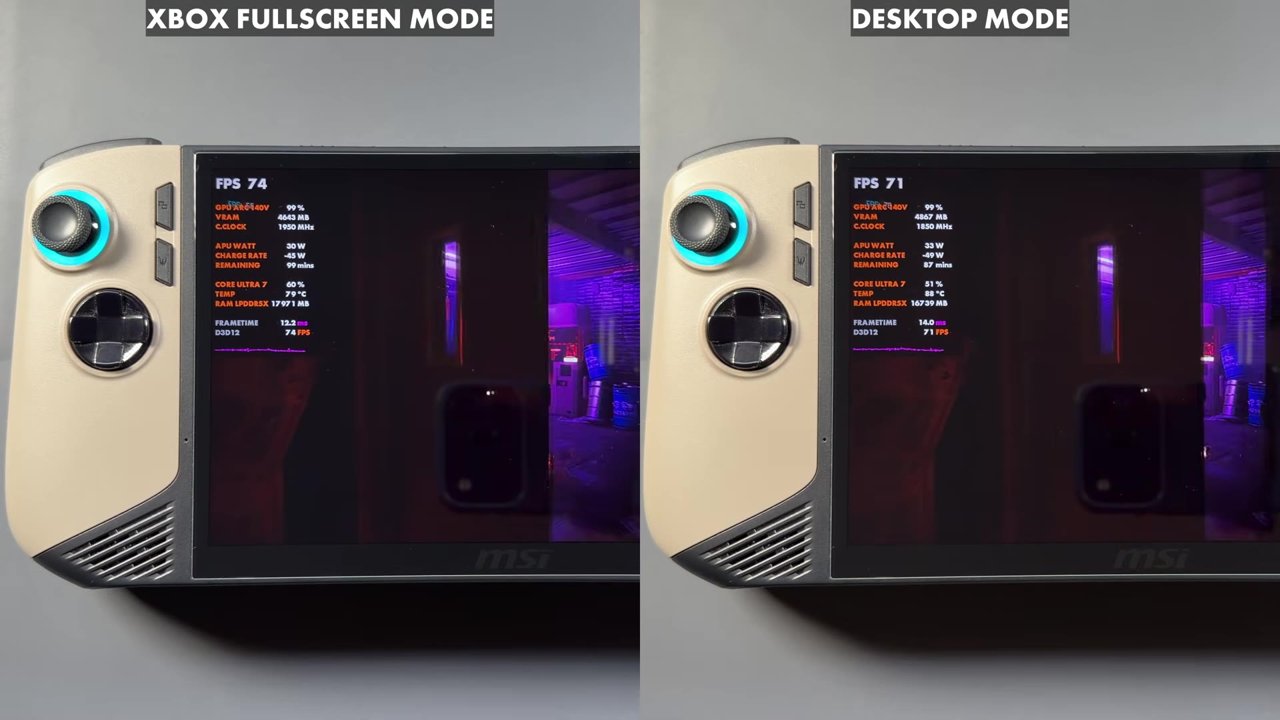
Almost two months before this video, the Claw devices officially got the Xbox full screen experience. On a 32GB system like this, it doesn't make a huge impact on performance, but some games did gain a little raw FPS, maybe 5% on average or a bit more depending on the game. Everyone has their own opinion on it, but I've come to really like using it. Make no mistake, this is still Windows, but for gaming on handhelds it's a nice step in the right direction toward making Windows an easier interface to use, and I can't wait to see how it evolves. For me, getting it officially on the Claw 8 AI+ has made the device that much better.
The price
Things have changed a lot since January 2025. Tariffs, the AI boom causing RAM and storage shortages, energy costs and more have pushed prices up like crazy for new and existing tech. The Claw 8 AI+ launched at $899 USD, and back then everyone was talking about how expensive it was. I kept saying that by mid to late 2025, $899 would look like a pretty good deal once the new devices came out, and that was before I even knew about the tariffs and the AI-driven shortages. After reviewing and testing it, I always thought $899 was fair, even if it was on the high end at the time.
As of January 2026, there are a few models with different prices. The official price for the current Sandstorm model is $1,099 USD, $200 more than the $899 I paid for mine at launch. When I made the video, it was in stock on the official MSI store, and Best Buy, Amazon and Newegg carry it as well, with prices ranging from $1,099 to about $1,400 depending on the model and availability. I have seen more stock over the past couple of months, which has been nice.
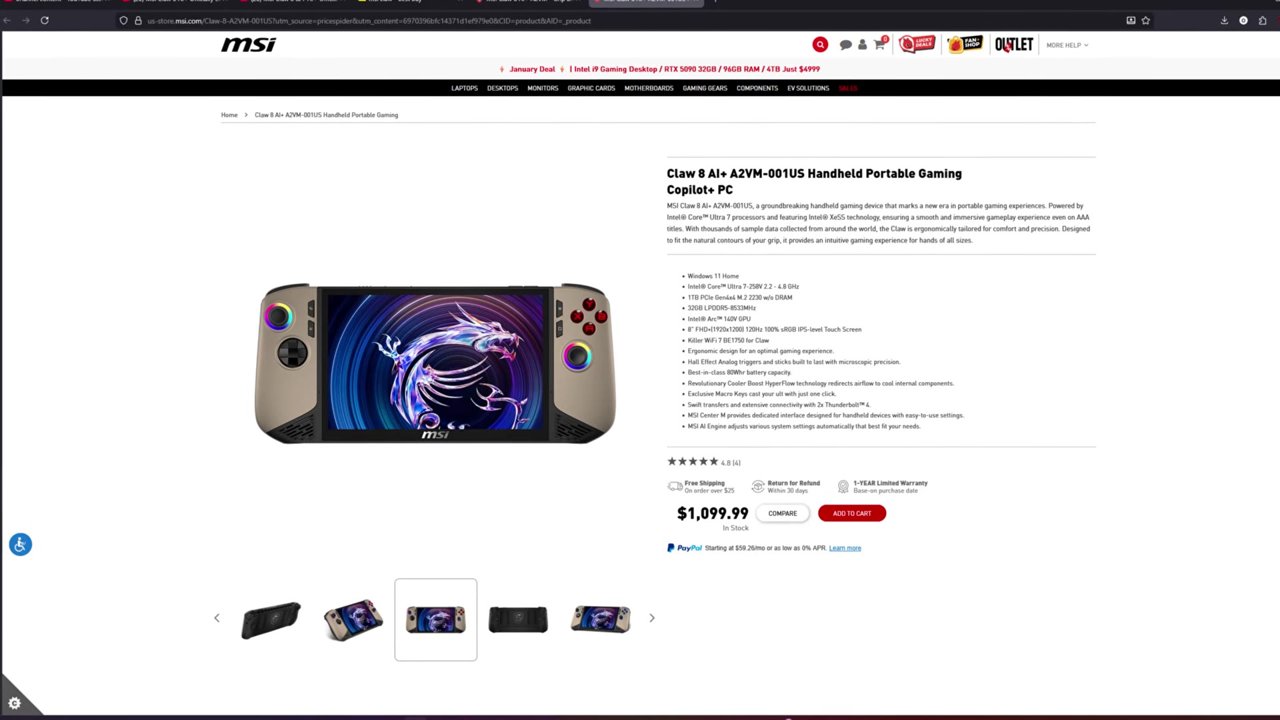
At the $899 launch price, this would be an absolute no-brainer to recommend in the current market, and I wish MSI could have held that price. At $1,099, it's harder to justify, even if it's still one of my top PC handhelds of 2025. That's been true of a lot of the new hardware too, and in my opinion PC handhelds are all very overpriced right now.
Verdict after 1 year
This handheld was a pleasant surprise after Intel and MSI's first attempt with the original Claw. My time with it has been pretty positive, and it has just worked as intended. MSI and Intel have kept updating and improving the BIOS, drivers and overall stability, and the Intel Claw handhelds are in good shape right now. From day one I've been happy with the game performance, build quality, comfort and Intel's support for the Core Ultra series, and that continues. My biggest complaints now are the higher pricing and the availability, which is still often a problem, especially since I like to recommend it and then it's hard for people to find.
If you're shopping for a PC handheld, the MSI Claw 8 AI+ is still a solid option to look at in 2026. Keep in mind, though, that Intel says new Core Ultra 300 handhelds are coming later this year, and after what they did with Series 2 in this device and what they showed at CES, I'm very excited for Panther Lake handhelds. If you want the newest Intel handheld, you may want to wait a few months. We don't know what those will cost yet, or whether the current models will go on sale. It may not be the best time to jump in knowing what's coming, but it's only January and they could be six to eight months away, so take that and do with it what you will.
Want more handheld tests?
New Steam Deck, ROG Ally, Legion Go and Steam Machine performance videos every week.